
Golf looks gentle, but a driver swing is actually one of the most violent rotational movements in sport.
Trunk rotation speeds exceed 700 degrees per second. Ground forces climb to roughly 1.5x bodyweight. The lumbar spine absorbs compressive loads approaching 8x bodyweight.
And you don’t do it once. Add in iron shots, and you’re repeating that rotational movement over and over each round.
Most golfers never dedicate time to sport-specific fitness training. Then, they wonder why their lower back is wrecked and their drives are 30 yards shorter than they used to be.
Let's take a look at the top 3 reasons that lead to injury and how to solve it.
Why stretching and random training is not enough.
Most golfers who do something for their fitness are:
1. Stretching before a round (if you count doing that rotation movement with an iron behind your back as stretching)
2. Following a general gym program that was never designed with a golf swing in mind.
Neither is enough.
Here's why.
Most strength training only loads the muscle in one direction — the concentric phase, when the muscle shortens. You push the weight up, gravity brings it down. The eccentric phase, where the muscle lengthens under load, is where most of the strength and protection actually live. And it's almost universally undertrained, because most equipment simply can't load it properly.
Stretching has the same problem from the other direction. Mobility without the strength to control it doesn't protect you, it just gives you a wider range of motion to get hurt in.
Golf is a deceleration sport as much as it is a power sport.
After contact, your body has to rapidly absorb everything it just accelerated. If your muscles can't handle that, your joints and soft tissue will. Every swing. For 18 holes. For years.
The answer isn't in your technique. It's in three specific physical gaps almost every golfer has.
The 3 things most golfers never train, and why fixing them changes everything.
1. Glute strength and activation
The problem: Your glutes are supposed to drive rotation. But in most adults who spend significant time sitting, they've basically clocked out. When the glutes go quiet, the lower back steps in to do rotational work it was never designed for. It can tolerate this for a while, but then it doesn't.
The fix: Loaded eccentric work on hip extension patterns that wakes the posterior chain back up and restores the glutes as the primary mover. Think of it like jumpstarting a car that's been sitting in the driveway too long — the engine still works, but it needs a reason to turn over again.
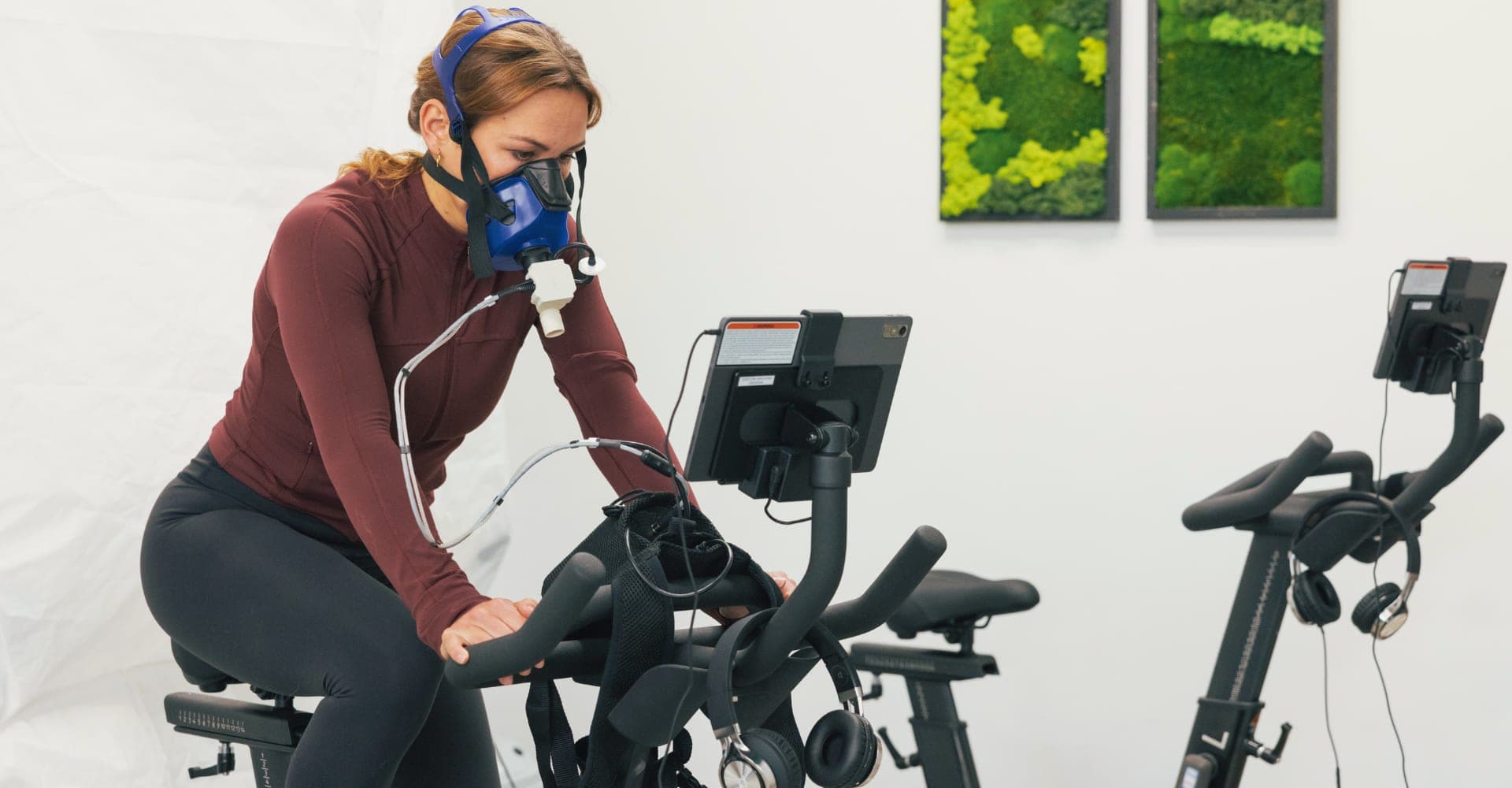
But before we program anything, we assess. We need to know exactly how your body is moving, where it's compensating, and what's actually driving the problem, because two people with the same back pain can have completely different root causes.
In our studio, we use Styku 3D body scanning to map posture and structural asymmetry, and PNOE metabolic testing to understand how efficiently your body is working as a whole. Combined with a movement assessment, it gives us a complete picture before we ever prescribe a single exercise.
2. Anti-rotation core strength
The problem: When playing golf, a rotational sport, your core's actual job is to actually resist rotation.
The hips and thoracic spine rotate, the lumbar spine is supposed to remain stable and transfer force efficiently up the chain. Without that stability, you're generating power with one hand and bleeding it out with the other.
And here's the layer most golfers don't think about:
Golf is a one-sided sport. You swing the same direction thousands of times, season after season. Research shows that strength asymmetry above 10-15% between sides significantly increases injury risk, and most golfers are well past that threshold without knowing it.
The fix: Training that teaches the lumbar spine to remain stable while the hips and thoracic spine do the rotating around it. In other words, imagine trying to fire a cannon from a canoe. Without a stable base, the power has nowhere to go.
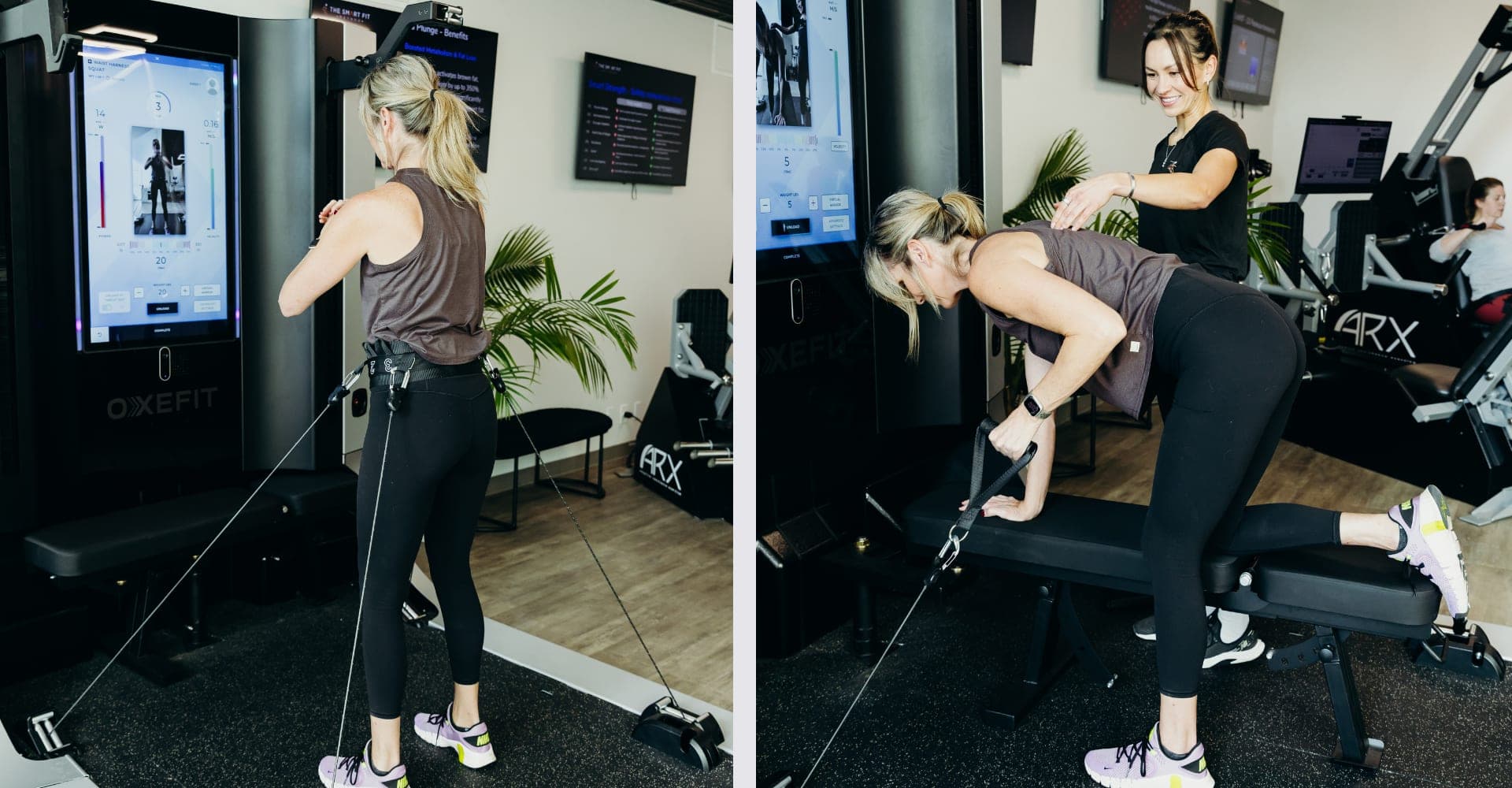
We also deliberately address the imbalance directly. Overloading the trail side and the underused half of the body to bring both sides within a safe and functional range.
At Smart Fit, the OxeFit XP1 makes this precise: it programs asymmetrical resistance and generates real-time force output data side-to-side, so we can see exactly where the gap is and close it systematically instead of guessing.
3. Eccentric strength and deceleration capacity
The problem: Your body has alot of work to do after impact to absorb everything. If your muscles can't handle that load, your joints and soft tissue will.
This is the one almost nobody trains, because most equipment simply can't load it properly. Standard strength training is almost entirely concentric — you push the weight up, gravity brings it down. The eccentric phase gets almost nothing. Think of it like training your brakes by only ever hitting the gas. You build the power but never develop the thing that controls it.
The fix: Directly and deliberately training the eccentric phase under load. At Smart Fit, we use ARX adaptive resistance technology, the only commercially available equipment that applies greater load on the eccentric phase than the concentric, calibrated in real time to your exact force output on every rep.
Research on this style of training consistently shows greater strength gains, better tendon adaptation, and significantly improved force absorption compared to traditional resistance work.
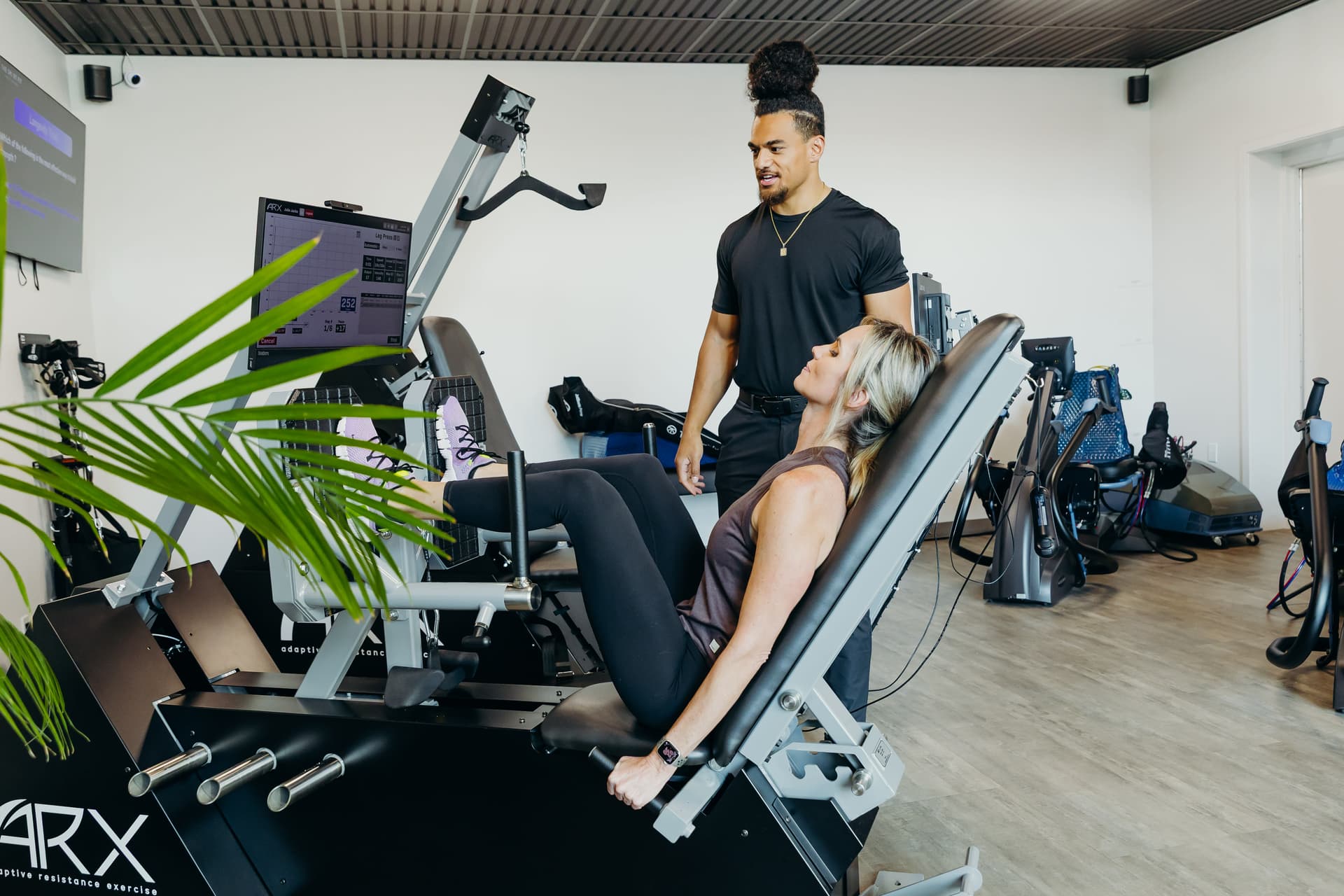
For a golfer, this type of training means your body decelerates the swing instead of dumping force into your joints. And muscles that can absorb more load can produce more on the next contraction. You can protect the swing and improve it at the same time. Fix your brakes, and you'll find you can also drive faster.
Playing for Longer, And Better
The point of all this isn't to shave two strokes off your handicap next month, although that tends to happen.
The point is that golf is a 50-year sport, and almost nobody trains for it like one. The golfers who are still playing their best in their 70s didn't get there by luck or good genetics. They built the underlying machine — the glute strength, the eccentric capacity, the stable core.
That's the whole idea behind Smart Fit Method. Come train with the precision of a pro athlete, receive data and measurement with the rigor of a clinician, and you don't have to decline on the timeline everyone tells you is inevitable. You just get to keep going, stronger and stronger.
Start your personalized Golf Program here
Who We Are, and Why We Want to Train You
At Smart Fit Method, no two programs look the same, because no two bodies are.
Whether you're 35 or 65, recovering from an injury or training to stay ahead of one. A golfer, a skier, or someone who just wants to keep doing what they love without their body getting in the way, we have something built specifically for you, never a generic one-size-fits-all.
Every program starts with a full assessment. Every program includes strength, conditioning, recovery, and we adjust as you progress.
This is our method. This is how good training should work.