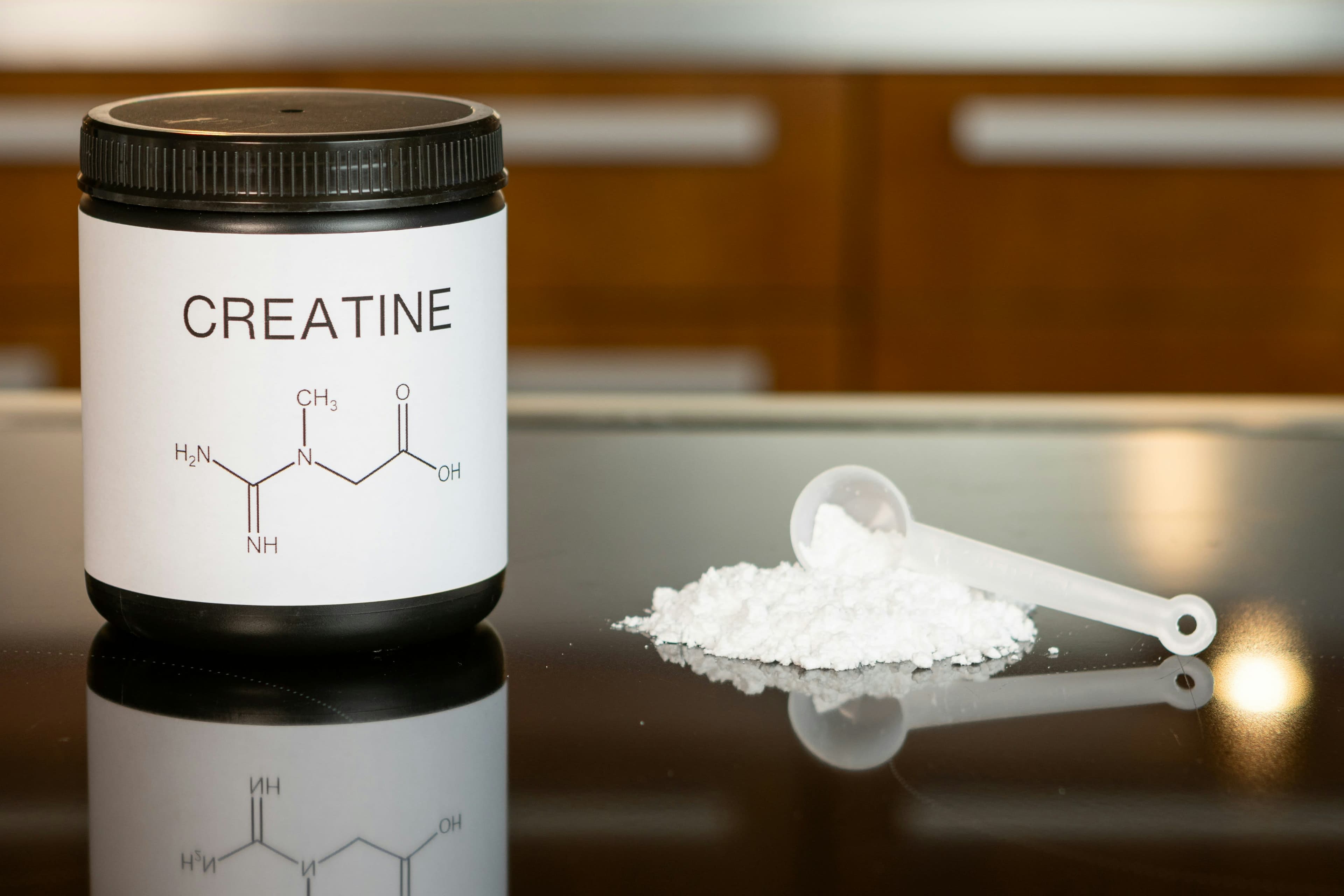
Creatine is widely recognized as one of the most thoroughly researched dietary supplements available today. You may have never heard of it before, but trust us, its benefits are as well-documented as protein powder, although they may not be as immediately noticeable.
Despite the extensive studies surrounding its use, many in the fitness and athletics space still question its overall efficacy and safety. Over the years, various forms of creatine have been introduced to the market, as well, each claiming to offer unique benefits such as improved absorption, reduced water retention, and accelerated muscle growth.
In this article, we will explore what creatine actually is, delving into its biological functions and how it supports athletic performance. We will also discuss the various different forms of creatine on the market and judge whether they are worth the extra high pricepoint. By the end, you'll have a clearer understanding of what creatine is, how it works, and where you can find a trusted source to purchase creatine.
What is creatine?
If you’ve never encountered it before, you may be wonder what, exactly, creatine is? How is this powdery, white stuff sourced, and what does it do?
Creatine is a compound made up of amino acids that is naturally occurring in foods like red meat and is produced by your liver and kidneys for your body. As a supplement, creatine is synthesized from cyanamide and sarcosine in labs. It is sold as a tasteless, odorless, white powder.
For more reading on creatine, we default to the information on Dr. Layne Norton’s website, as he has covered the research on creatine extensively.
The science of creatine
Learning exactly how creatine works can be tricky, and Dr. Norton’s articles can read very scientific - which is a good thing!
ATP (Adenosine Triphosphate) is the body’s primary energy source, essential for nearly all processes. It consists of one adenosine molecule and three phosphate groups. When ATP loses a phosphate group, it releases energy and converts to ADP (Adenosine Diphosphate), which needs to be re-synthesized to continue providing energy.
This is where creatine supplementation comes in.
Creatine forms creatine phosphate in muscle cells, which quickly donates a phosphate back to ADP, regenerating ATP. This process allows for faster energy release and greater energy reserves for muscle use during workouts.
Long story short? Creatine helps your muscles recover more quickly, meaning you can get back to baseline or better in a shorter period of time.
Benefits of creatine
At The Smart Fit Method, we’re all about recovery, which is why we devote just as much time in the studio to helping your body bounce back from exercise as we do working you out. After all, the benefits of exercise come after the recovery. We love our brand partner Promix’s creatine supplement, and here’s why.
Speeding up muscle recovery
Creatine helps activate satellite cells in muscles, which help repair micro-tears caused by exercise.
Increasing anabolic hormones
Anabolic hormones, like insulin, human growth hormone, estrogen, and testosterone, contribute to growth and tissue repair.
Improving brain function
Creatine can increase the amount of phosphocreatine in the brain, which may help with memory.
What type of creatine should I take?
There are a few types of creatine on the market today, but we’re going to save you some steps.
Take creatine monohydrate. It’s the only form of creatine that has been widely studied to confirm its benefits. The other types of creatine (ethyl ester, hydrochloride, buffered, etc.) are mostly just marketing tactics to increase the price because of how cheap creatine monohydrate is to make and buy.
Creatine monohydrate consistently emerges as the best option. It is one of the most thoroughly researched supplements and has proven its effectiveness over time. Studies have shown it to be 100% bioavailable, effectively saturating muscle cells. While other forms of creatine might offer similar benefits in some cases, they often come at a significantly higher cost without being better than the cheap, effective creatine monohydrate.
For more information, we recommend this article by Dr. Norton which goes in-depth on the various forms of creatine on the market.
Don’t be swayed by marketing gimmicks. As the saying goes, “If it ain’t broke, don’t fix it!” If other forms were better, we’d recommend them to you, but the truth is, creatine monohydrate is the cheapest and best product on the market.
Will creatine make me gain weight?
This popular criticism of creatine comes from one of the ways that creatine functions. People often say they don’t like to take creatine because it will make them gain weight. But is that true?
Creatine hydrates muscle cells, leading to an increase in their volume and a resulting swelling. This swelling actually improves protein synthesis and plays a role in the muscle-building effects of creatine. So, while creatine may make you gain water weight - that’s actually a good thing!
If a company advertises that their creatine won’t cause weight gain, you probably shouldn’t purchase that product. Either they’re lying for marketing purposes, or their product doesn’t produce one of the main reasons to take creatine in the first place! Gaining weight isn’t always a bad thing, especially if it’s creatine water weight.
Try Promix Creatine
At our studios, we carry Promix brand creatine monohydrate. Here are a few reasons why we love it:
Made in North America - product of Canada
Non-GMO
Easy to mix with electrolytes or protein supplements
Simple package design - no frills no fuss
Single ingredient formulation
Robust heavy metal and allergen testing and transparency on website
Want to give creatine a try? Pick up a bag the next time you’re in studio or book a consult to ask a trainer for more information!