In recognition of Menopause Awareness Month and Menopause Awareness Day (October 18)
If you're a woman over 40 and the exercise routine that worked in your 30s has stopped delivering results, you're not imagining things. Your body has fundamentally changed.
During perimenopause and menopause, declining estrogen levels trigger a cascade of metabolic shifts. You lose muscle mass faster, 3-8% per decade after 30, accelerating after menopause. Your body composition changes, with fat redistributing to your midsection. Your resting metabolic rate drops. And suddenly, you're working harder than ever with less to show for it.
The fitness industry has failed women in this life stage. The endless cardio classes and light-weight "toning" programs? They're making the problem worse.
Here's what actually works: strength training, body composition tracking, time-efficient protocols, and a complete reframe of what "success" looks like.
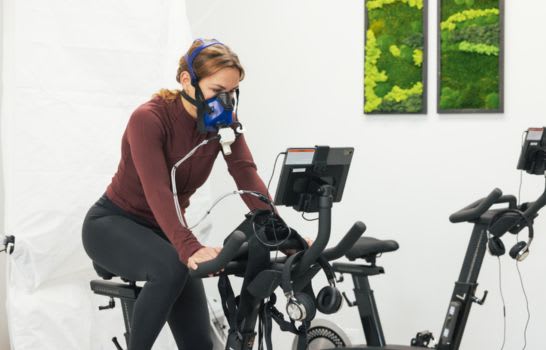
At Smart Fit Method, we use 3D body composition scanning and VO2 max testing to help women understand what's happening inside their bodies. Because you can't manage what you don't measure. This Menopause Awareness Month, let's change the conversation about exercise after 40.
Stop Tracking Weight. Start Tracking Body Composition.
Your bathroom scale is lying to you.
When you step on a traditional scale, you see one number: total body weight. But that number doesn't distinguish between fat and muscle. And for women over 40, that distinction is everything.
During menopause, women can lose up to 10% of their muscle mass. When you restrict calories without proper strength training and protein intake, you lose muscle along with fat. The scale drops. You celebrate. But you've just destroyed your metabolic engine.
Here's why this matters: Muscle is metabolically active tissue. It burns calories 24/7, even at rest. Fat tissue doesn't. When you lose muscle, your resting metabolic rate plummets. This is why women in their 40s and 50s say, "I'm eating the same way I always have, but gaining weight."
They're not eating more. They're burning less because they've lost muscle mass.
What to do instead: Track body composition monthly using a 3D body scanner. This technology measures lean mass, fat mass, and body fat percentage, showing you whether your interventions are working or sabotaging your metabolism.
Women who track body composition make better decisions. They see that strength training is building muscle even when the scale isn't moving. They understand that a 2-pound weight gain might actually be 4 pounds of muscle gained and 2 pounds of fat lost. That's massive progress a scale would hide.
The scale measures weight. Body composition scanning measures health.
Lift Heavy Weights (Yes, You)
The myth that women should lift light weights for "toning" has done incalculable damage.
Here's the truth: after age 30, you lose 3-8% of your muscle mass per decade. After menopause, that accelerates. Less muscle means a slower metabolism, which means your body burns fewer calories at rest.
You need to build and preserve muscle. And you can't do that with 3-pound dumbbells and high-rep circuits.
The science is clear: Progressive resistance training (lifting weights that challenge your muscles to adapt) is the single most effective intervention for preserving muscle mass during menopause. It's not optional. It's foundational.
Research shows that post-menopausal women may need higher training volumes than their pre-menopausal counterparts to achieve the same muscle-building results. Standard fitness guidelines don't account for this. You need a protocol designed specifically for your hormonal status.
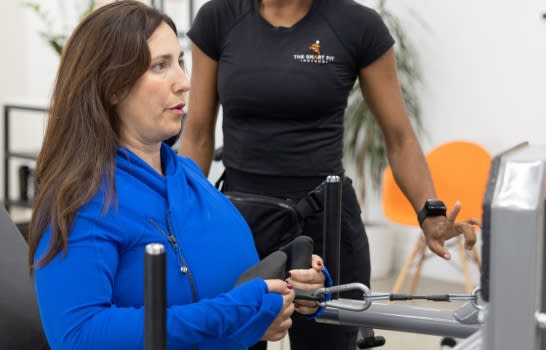
Real results from Smart Fit Method: A 72-year-old woman at our Rancho Santa Fe studio gained 3 pounds of lean muscle mass, reduced body fat, and improved strength by over 40%, in just 2.5 months. Not 2.5 years. 10 weeks. This is what happens when you track body composition, lift with proper intensity, and follow a protocol designed for your physiology, not generic fitness advice.
What to do instead: Focus on compound movements, so exercises that work multiple muscle groups simultaneously. Squats, deadlifts, rows, and presses. Aim for 2-3 strength sessions per week, prioritizing intensity over duration.
Time-efficient, high-intensity resistance training can produce results equivalent to 2+ hours of traditional weightlifting. The key is maximizing time under tension (the amount of time your muscles are working against resistance). Twenty minutes of focused, adaptive resistance training can replace hours of conventional gym work.
Beyond fat loss: Strength training improves bone density, which is critical for women at risk of osteoporosis. It enhances insulin sensitivity, making your body more efficient at using carbohydrates for energy instead of storing them as fat. And it increases your resting metabolic rate, so you burn more calories around the clock.
Muscle is your metabolic engine. Build it, preserve it, prioritize it.
Stop Doing Hours of Cardio
Long-duration cardio is not the answer for fat loss after 40.
Yes, cardio burns calories. But excessive steady-state cardio (think hour-long jogs or spin classes) can work against you. It increases cortisol, especially if you're not recovering properly. It can break down muscle tissue if you're not eating enough protein. And it doesn't build the muscle you desperately need.
The problem with chronic cardio: When you do long bouts of moderate-intensity cardio while restricting calories, your body adapts by becoming more efficient. It learns to do the same work with less energy. Your metabolism slows. You hit a plateau. And adding more cardio only compounds the problem.
What to do instead: Combine short bursts of high-intensity interval training (HIIT) with Zone 2 cardio for maximum metabolic benefit.
HIIT improves insulin sensitivity and cardiovascular fitness in a fraction of the time. Just 15-20 minutes of interval work can deliver superior results to an hour of steady-state cardio. It preserves muscle mass, spikes your metabolism, and improves your body's ability to burn fat for fuel.
Zone 2 cardio (low-intensity, conversational pace) enhances fat oxidation without spiking cortisol. It trains your body to preferentially burn fat during exercise, which is exactly what you want during menopause when fat storage increases.
Together, these approaches create a powerful combination that doesn't require hours in the gym. Aim for 2-3 short cardio sessions per week (20-30 minutes max), and prioritize strength training as your primary exercise modality.
More cardio isn't better. Smarter cardio is better.
Focus on Healthspan Metrics, Not Just Fat Loss
Here's the real question: Why do you want to lose body fat?
Most women say they want to look better, feel more confident, or fit into their favorite jeans. Those are valid goals. But at Smart Fit Method, we encourage a deeper reframe: focus on healthspan, not just aesthetics.
Healthspan is the number of years you live in good health - strong, mobile, energetic, and independent. The metrics that predict healthspan aren't about how much you weigh. They're about:
Muscle mass: The strongest predictor of longevity and functional independence as you age. Research shows that grip strength alone is a powerful predictor of all-cause mortality.
VO2 Max: Your cardiovascular fitness and aerobic capacity. Studies consistently demonstrate that higher VO2 max correlates with lower mortality risk. In fact, VO2 max is now recognized as one of the most reliable biomarkers for predicting lifespan and healthspan.
Metabolic health: Insulin sensitivity, resting metabolic rate, and fat oxidation capacity. These markers determine how efficiently your body uses energy and resists chronic disease.
Body composition: The ratio of lean mass to fat mass. This matters far more than total body weight for predicting health outcomes.
When you focus on these metrics, fat loss becomes a byproduct of getting healthier, not the sole measure of success.
What to do instead: Track comprehensive health markers quarterly. Get 3D body scans to monitor lean mass. Test your VO2 max and metabolic rate. Measure functional movement patterns and grip strength.
This shift in mindset is powerful. You stop chasing a number on the scale and start building a body that allows you to do what you love for longer. You measure progress by how you feel, how you move, and how your health markers improve, not by whether you lost two pounds this week.
Fat loss is important. But strength, endurance, and metabolic health matter more.
The Truth About Exercise After Menopause
The fitness industry has sold women a lie: that fat loss is simple. Just eat less, move more, and show some discipline.
But for women over 40 (especially during perimenopause and menopause) fat loss is anything but simple. Your hormones are shifting. Your metabolism is adapting. Your body composition is changing. And the strategies that worked in your 20s no longer apply.
The women who succeed are the ones who stop guessing and start measuring. They track body composition, not just weight. They prioritize muscle over cardio. They lift heavy and train smart. They work with professionals who understand the science of menopause.
Most importantly, they reframe the goal. Fat loss isn't the destination. Building a strong, resilient, metabolically healthy body is.
This Menopause Awareness Month, let's stop telling women to eat less and exercise more. Let's start empowering them with data, science, and strategies that actually work.
Want to learn about the nutrition and metabolic strategies that complement this training approach? Read our companion article: Nutrition & Metabolic Strategies for Fat Loss After 40.
Frequently Asked Questions
Q: Will lifting heavy make me bulky?
A: No. Women don't have enough testosterone to "bulk up" without intentional effort, specific nutrition protocols, and years of dedicated training. Strength training builds lean, toned muscle and increases your metabolism. It's the best tool for fat loss after 40.
Q: How often should I strength train during menopause?
A: Aim for 2-3 strength training sessions per week, focusing on compound movements. Post-menopausal women may need higher training volumes (more sets per muscle group) to achieve the same results as younger women.
Q: Can I do cardio and strength training on the same day?
A: Yes, but prioritize strength training first when your energy is highest. Keep cardio sessions short (20-30 minutes) and strategic - either HIIT or Zone 2, not moderate-intensity steady-state.
Q: How long does it take to see results?
A: Most women see measurable changes in body composition within 8-12 weeks of consistent strength training and proper nutrition. But remember: the goal is sustainable progress, not quick fixes.
Q: What's the difference between VO2 max and regular cardio fitness?
A: VO2 max is the maximum amount of oxygen your body can utilize during exercise. It's a precise measure of cardiovascular fitness, aerobic capacity, and is one of the strongest predictors of longevity. Regular cardio can improve your VO2 max, but specific testing is required to measure it accurately.
About Smart Fit Method
The Smart Fit Method provides highly effective semi-personal training, focused on strength, conditioning, and healthspan. Suitable for people of all ages, body types, and fitness levels, Smart Fit studios offer tailored 20-minute sessions for optimal results. Smart Fit combines expert coaching with detailed data analysis to ensure proven, durable outcomes. Metabolic testing and 3D body composition scans identify each member's unique metabolic processes, supporting their specific fitness and longevity through personalized programs tailored to their individual needs.
If you'd like to learn more about how we can support you, book a complimentary intro session at www.smartfitmethod.com
Train Smarter. Live Stronger.