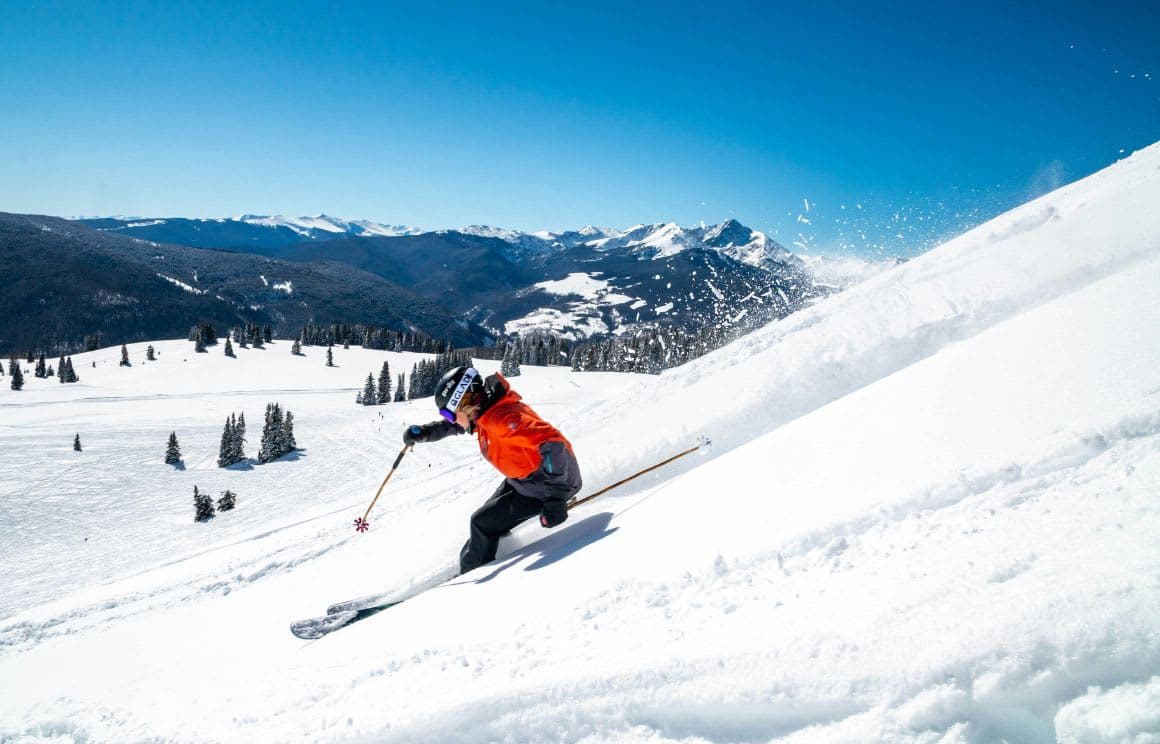
You've got your pass. Your gear is tuned. But is your body ready for ski season?
Whether you're skiing 10 days or 50 this season, showing up without ski-specific training means you're not performing at your potential. Most skiers, even experienced ones, skip pre-season conditioning and pay for it with leg fatigue, soreness that lingers between ski days, or that nagging feeling that you could be skiing stronger if your body could just keep up.
Here's the reality: skiing demands eccentric strength, cardiovascular endurance at altitude, dynamic balance, and rapid recovery between days. If you're not training these systems before the snow falls, you're leaving performance on the table.
The good news? With 8-12 weeks of focused, ski-specific training, you can show up to opening day with your legs ready, ski harder and longer, and still feel strong on consecutive days - whether you're chasing powder at your local hill or planning that week-long trip out West.
Why Ski-Specific Training Matters
"Can't I just work out at the gym?"
You could. But here's what most people miss: skiing isn't just about having strong legs. It's about how those muscles work together under very specific conditions, eccentric loading during turns, sustained isometric holds, explosive movements, and all of it while managing balance on variable terrain at altitude.
Traditional gym workouts build general strength. Ski training builds the specific capacities skiing demands:
Eccentric strength to control the lengthening of muscles during turns and protect your knees from the repetitive impact of moguls and landings
Cardiovascular endurance to maintain power output run after run, especially at altitude where oxygen is limited
Balance and proprioception to react to changing snow conditions, edge effectively, and prevent injury when you hit unexpected terrain
Recovery capacity to bounce back between ski days so you're not wrecked after day one
When to Start Training for Ski Season
Start 8-12 weeks before your first ski day. That timeline allows your body to build strength, improve cardiovascular capacity, and develop the neuromuscular control skiing requires.
If you're reading this in September or early October and the mountain opens in November or December, you're right on schedule. If you're reading this in late October and haven't started? Start now. Even 4-6 weeks of focused training is exponentially better than showing up cold.
The Four Pillars of Ski Conditioning
1. Eccentric Strength Training
This is the most overlooked element of ski training, and the most important for injury prevention.
When you ski, your muscles aren't just contracting (shortening). They're controlling lengthening under load: that's eccentric strength. Every turn, every mogul, every time you absorb variable terrain, your quads, glutes, and hamstrings are working eccentrically to control your descent.
Traditional leg presses and squats build concentric strength (the "up" phase). But they don't adequately prepare your muscles for the eccentric loading skiing demands. That's why your legs burn out so fast and why knee injuries are so common. Your muscles simply aren't trained to handle that specific stress.
How to train it: Focus on exercises with slow, controlled lowering phases. Squats with a 4-5 second descent. Step-downs. Resistance training that adapts to your effort in both directions (not just the push, but the return).
At Smart Fit, we use ARX adaptive resistance technology that automatically adjusts resistance during both the concentric and eccentric phases, maximizing time under tension and building exactly the kind of strength skiing demands, without the joint stress of heavy weights.
2. Cardiovascular Conditioning for Altitude
Most ski destinations sit between 8,000-12,000 feet. At that elevation, there's 25-40% less oxygen available than at sea level. If your cardiovascular system isn't prepared, you'll be gasping by run two.
But here's the thing: you don't need to log endless hours on a treadmill. Skiing is interval-based bursts of high intensity, followed by recovery on the chairlift. Your training should mirror that.
How to train it: High-intensity interval training (HIIT) 2-3 times per week. Sprint intervals that elevate your heart rate for 20-90 seconds, followed by active recovery. This builds both your aerobic base and your lactate tolerance (your ability to perform when your legs are burning).
Bonus: If you can train with altitude simulation or supplemental oxygen modulation, you can specifically prepare your body for the oxygen demands of mountain skiing. At Smart Fit, we use CAROL Bike paired with the LiveO2 system to simulate altitude training or boost oxygen delivery, training your body to perform efficiently in low-oxygen environments.
3. Balance and Agility Training
Skiing requires constant micro-adjustments. Your ankles, knees, and hips are continuously coordinating to maintain edge control, adapt to variable snow, and keep you upright when you hit unexpected terrain.
Most people ignore balance training until they're on the mountain, and by then it's too late. Balance is a trainable skill, and the more you train it off the mountain, the more confident and controlled you'll be on it.
How to train it: Single-leg balance progressions. Start with simple single-leg stands, progress to eyes-closed balance, then add instability with a balance board or SlackBlock. Work up to dynamic movements, single-leg squats, jump-to-balance landings, rotational reaches.
3-4 short balance sessions per week (even 5-10 minutes) will make a measurable difference in your edge control and injury prevention.
4. Strategic Recovery
Here's what separates weekend warriors from people who can ski hard multiple days in a row: recovery.
Skiing causes significant muscle damage and inflammation (eccentric loading does that). If you're not actively managing recovery, you'll be too sore and fatigued to perform on day two, three, or four.
How to train recovery: Build recovery protocols into your training now so your body adapts. Red light therapy accelerates muscle repair. Sauna improves circulation and reduces inflammation. Cold plunge (or contrast therapy) manages soreness and enhances recovery between efforts.
The key is consistency. Recovery isn't something you do once when you're sore. It's a system you build into your routine.
Sample 8-Week Ski Training Program
Here's a framework you can adapt based on your access to equipment and time:
Weeks 1-4: Foundation
• 3x/week: Strength training (emphasis on eccentric control)
• 2x/week: HIIT cardio (20-30 minutes)
• 4x/week: Balance drills (5-10 minutes)
• 2x/week: Active recovery (yoga, foam rolling, sauna)
Weeks 5-8: Build
• 3x/week: Strength training (increase intensity and volume)
• 2x/week: HIIT cardio with altitude simulation if available
• 3x/week: Balance drills (progress to dynamic movements)
• 3x/week: Recovery protocols (red light, cold plunge, contrast)
Key movements to include:
• Squats and split squats (slow eccentric phase)
• Single-leg step-downs
• Lateral lunges
• Hamstring curls
• Core rotational work
• Sprint intervals
• Balance board progressions
Common Ski Training Mistakes to Avoid
Mistake #1: Waiting until November to start training By the time lifts open, it's too late to build meaningful strength or conditioning. Start 8-12 weeks out.
Mistake #2: Only training quads Skiing requires full-body integration. Neglecting glutes, hamstrings, core, and upper body creates imbalances and increases injury risk.
Mistake #3: Skipping balance work Balance is where most recreational skiers have the biggest opportunity for improvement. It's also the easiest to train, no gym required.
Mistake #4: Ignoring recovery If you're not managing inflammation and muscle damage during training, you won't be able to handle it during consecutive ski days.
Mistake #5: Training like a bodybuilder instead of an athlete Isolated muscle work has a place, but skiing requires integrated, dynamic movement patterns. Train movements, not just muscles.
In-Season Training: Don't Let Your Gains Disappear
Once ski season starts, most people stop training. Big mistake.
Research shows that strength gains can decline by 8% after just five weeks without training. And here's the kicker: skiing alone won't maintain the strength you built in the off-season. Skiing overloads your quads but underloads your hamstrings, creating imbalances that increase injury risk.
In-season maintenance: 2 strength sessions per week (never the day before a ski day). Keep intensity moderate. Prioritize recovery. This maintains your gains and prevents the quad-dominant imbalances that develop from skiing alone.
The Smart Fit Approach: Technology-Driven Ski Training
At Smart Fit Method, we built the Ski Performance Program around the exact demands skiing places on your body, using the technology and methods that give you the best results.
ARX adaptive resistance builds eccentric strength safely and efficiently, maximizing time under tension without the joint stress of heavy weights.
Vasper combines compression, cooling, and interval training to build endurance and lactate tolerance in under 20 minutes, simulating the demands of hard ski runs.
OxeFit enables ski-specific functional movements like belt squats, rotational pulls, and unilateral leg work that improve stability and balance.
CAROL Bike + LiveO2 delivers AI-controlled sprint intervals with altitude simulation, training your body to perform efficiently in low-oxygen environments.
Lumati 5-in-1 recovery system combines red light therapy, hydrogen therapy, vagus nerve stimulation, vibration, and breathwork to accelerate recovery between sessions.
The program was designed by Connor Darnbrough, Smart Fit co-founder and former #3-ranked Canadian skier. It's the same methodology he used at the national level, adapted for efficient 20-minute sessions three times per week.
Ready to Train Smarter This Ski Season?
You don't need to spend hours in the gym. You need focused, ski-specific training that builds the exact capacities skiing demands: eccentric strength, cardiovascular endurance, balance, and recovery.
Start 8-12 weeks before your first ski day. Train 3 times per week. Prioritize eccentric strength and HIIT cardio. Don't skip balance work. Build recovery into your routine.
Do that, and you'll show up to opening day stronger, ski longer without fatigue, and actually enjoy every day on the mountain - not just day one.
The Smart Fit Ski Performance Program launches October 22 in Park City and Salt Lake City. Learn more about our 8-week training protocol here.
Related Articles:
Is Pain-Free Exercise Possible?
Cold Exposure Training - Why It Works
The SFM 101 | The Power in 4 Pillars of Exercise
About the Author: This article was developed in collaboration with Connor Darnbrough, co-founder of Smart Fit Method and former top-ranked Canadian skier. Connor's training methodology combines competitive ski racing principles with advanced fitness technology to deliver measurable results in minimal time.