 New: Sport Performance Programs - Built for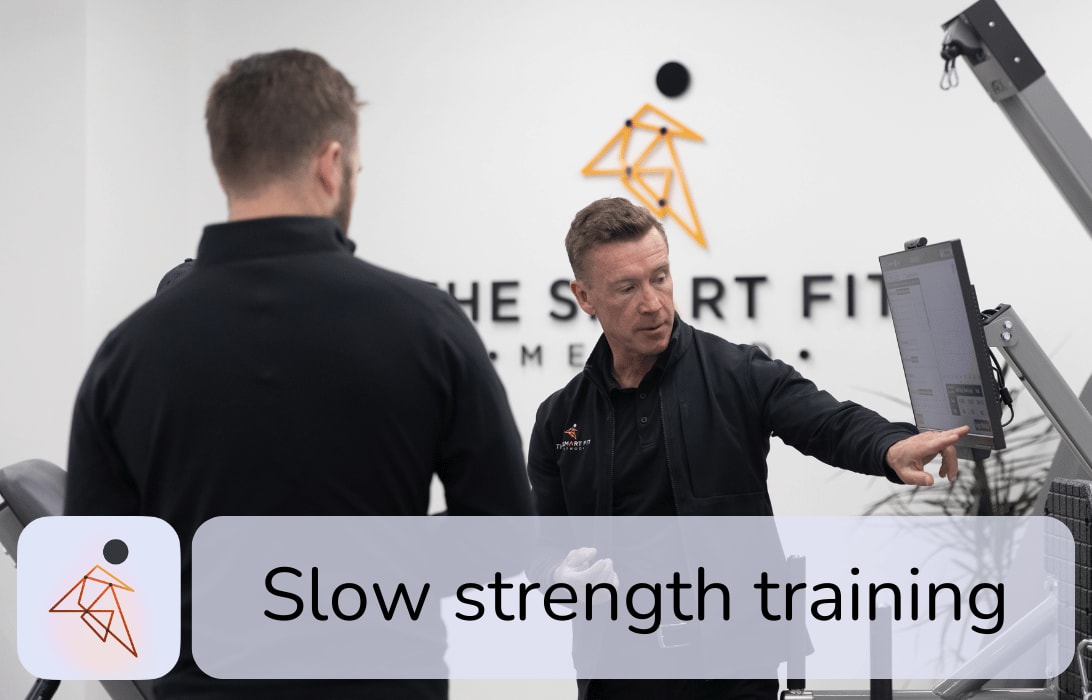
If you’re new to strength training, it can be difficult to know where to start. Strength training is one of the most rewarding things you can do for your health, but if you don’t do it properly, you can end up wasting time, becoming injured, or worse. Even a seasoned athlete may not know how to properly strength train.
So what’s the answer? How do we know what is proper strength training?
Utilizing cutting-edge equipment and having all of our programs thoroughly backed by the latest science is what gives our personal trainers the edge at The Smart Fit Method. We understand how to properly strength train to maximize strength gains while minimizing injury. We also minimize the time spent strength training, making the most out of every single session.
Keep reading to learn about how our method utilizes the principles of proper strength training and Super Slow strength training to get started seeing actual results in your health and fitness.
What is slow strength training?
You may have never heard of slow strength training, Super Slow strength training, or slow slow training before, but it began in Orlando, Florida when inventor Ken Hutchins was working with Nautilus to develop a program that was safe for osteoporosis patients. His findings? Everyone can benefit from Super Slow training.
Slow strength training is a protocol where a series of 20 second reps are performed, 10 seconds in the concentric phase and 10 seconds in the eccentric phase, until the muscle is completely fatigued. The protocol increases strength while minimizing blood pressure response and potential for injury.
Being able to minimize injuries while strength training opens up a world of possibilities for demographics who simply cannot afford the risk. And those demographics (think: chronic illness populations, aging populations, those with hypermobility issues, etc.) stand to receive life-changing benefits from strength training. Skeletal muscle supports so many of the body’s functions, and being able to safely grow and strengthen lean mass is critical to health and longevity.
If you’re interested in further reading the research on Super Slow strength training, check out The University of New Mexico’s review of the studies.
In an ordinary gym setting, you’ll see virtually no one utilizing super slow training protocols due to how difficult it is to perform on standard gym equipment. All of the research conducted on Super Slow training utilized Nautilus machines, but we have an even better way.
Best way to do super slow strength training
The Smart Fit Method utilizes ARX’s AI technology, harnessing the power of exercise robotics to make each strength training workout 94% more effective than when using traditional weights. When it comes to super slow strength training, it’s easy to see why our equipment beats the competition.
The best way to do slow strength training is to work with a personal trainer and use a machine like ARX to ensure you have proper form, perform both concentric and eccentric phases, and work towards at least 40% inroad into your muscle. Each of these steps is critical for strengthening muscle safely.
Simply practicing slow strength training on your own in a weight room is not typically enough to achieve a 40% inroad due to several factors including inefficient load and motivation. Having access to the AI-powered ARX and working with a personal trainer ensures you achieve that 40% inroad necessary to properly strength train.
Personal training
Working with a personal trainer can be expensive, and finding equipment like the ARX is usually impossible when you’re going to a big box gym. The Smart Fit Method makes it affordable to access high-quality resources and see real results. Try our free AI-strength training session at a longevity studio near you to see how slow strength can transform your life.
Benefits of slow strength training
There are so many more benefits to slow strength training than just building and strengthening muscle. The total benefits are much more exciting than that, especially for trainees over 40. The benefits of slow strength training for your health are:
Increased strength
Injury prevention
Stable blood pressure
Saves time in the gym
Decreases cholesterol
Increases bone density
When you unlock the full benefits of slow strength training, the results are amazing.
Slow strength training study participants increased strength by 50% in 10 weeks. Zero study participants were injured while training. Slow strength training does not spike blood pressure, unlike regular resistance training, and exercises need to be performed less often than other protocols.
Our members only need to come once a week for a single, 20 minute Smart Strength session on the ARX. The slow strength protocol saves you six hours per week in the gym you would otherwise spend training with inefficient weights and still being unable to achieve a 40% inroad. Training at The Smart Fit Method is the answer for anyone who wants the benefits of strength training without the prohibitive time investment it would take on your own.
Want to read more about the benefits of slow strength training? Check out the full science review on WebMD. Want to give our ARX protocol a try? Book a free session at The Smart Fit Method.
How to get started slow strength training
Getting started with slow strength training is the obvious choice for anyone who has been hesitant to lift weights before due to health concerns. It’s also a fantastic option for the veteran bodybuilder, too, as it will provide you the maximum amount of benefits in the minimum amount of time. Here’s how to get started.
To start slow strength training, the right equipment is essential. The ARX or Nautilus machines are ideal for their ability to control the range of motion, unlike free weights. The machine helps hold your form during the 20 second rep. Spend 10 seconds on the concentric phase, then 10 seconds on eccentric.
Concentric vs. Eccentric phases
We want to give a quick note on the difference between concentric and eccentric phases since understanding the two steps in the range of motion is critical to understanding why Slow strength training needs to be completed on a machine like ARX.
Concentric is the initial phase of the range of motion where the muscle is shortening. The eccentric phase is when the muscle lengthens. Think about a flight of stairs. When you climb up, you are applying force in the concentric phase. When you step down, you lower your weight, applying force in the eccentric phase.
More injuries happen by falling down stairs or stepping down off a curb than climbing up because we typically don’t challenge our muscles in the eccentric phase. Therefore, we are weaker in the eccentric phase, leaving ourselves open to accident and injury.
Slow Strength Training at The Smart Fit Method
Slow strength training is the most effective protocol for building strong, healthy muscle while minimizing injury risk. It’s proven in multiple studies to be an effective method for strength training. Utilizing slow strength training allows trainees to practice proper strength training, which executes both concentric and eccentric phases for at least a 40% inroad into the muscle.
Ready to get started with slow strength training at The Smart Fit Method? Book your first session for free today and work with your personal trainer to determine the right program for you.
Next Post
MAY 21/24
The role of protein in weight loss