 New: Sport Performance Programs - Built for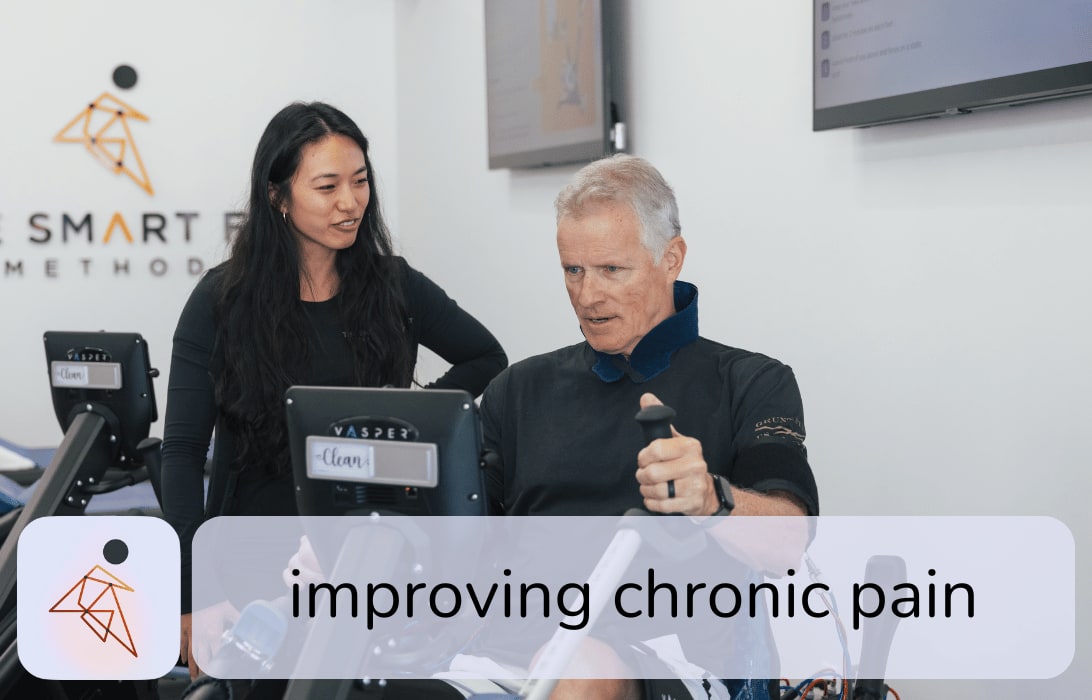
For many, having chronic pain impacts their life in almost every way. It affects their work and family life, dictates their schedule, and prevents them from making choices and engaging in activities. A major concern for our clients is how chronic pain prevents their ability to exercise. Many who suffer from chronic pain have given up on fitness altogether, which only leads to further deterioration.
Does this sound like you? Keep reading.
Chronic pain doesn’t have to be a life sentence. You have options beyond suffering or surgery. The Smart Fit Method Carlsbad recently hosted Dr. John How from The How Clinic in Encinitas, an expert in pain management and surgery alternatives. He hosted a discussion with our clients on how to manage and improve chronic pain without turning to surgery. You can listen to it by clicking that link.
First, we’ll give a brief overview of what’s known about chronic pain disorder before we discuss Dr. How’s knowledge and advice on how to manage this life-altering condition.
What is chronic pain disorder?
Having an understanding of how chronic pain disorder is diagnosed will help inform the protocols and modalities for improvements, so let’s take a moment to learn what constitutes chronic pain.
Chronic pain disorder, also known as chronic pain syndrome, refers to persistent pain that lasts for months or even years, typically longer than three to six months. It can arise from an initial injury or health condition, but in many cases, the pain continues even after the underlying cause has healed.
Many people live with chronic pain disorder but have never sought a diagnosis because chronic pain can seem mundane. It’s rare to make it through your 40s and 50s without some aches and pains, after all.
What causes chronic pain disorder?
Although chronic pain may begin with a sudden fall or injury, for many the pain continues long after treatment for that initial incident has been completed. For many, their chronic pain is debilitating and cannot be dealt with using the “stiff upper lip” mentality. And an acute injury isn’t the only way to develop chronic pain.
Chronic pain may be caused by acute injury or various conditions such as arthritis, fibromyalgia, nerve damage, or spinal conditions. Symptoms can worsen the longer the injury persists untreated. Psychological factors like stress, anxiety, and depression can also contribute to the perception of pain.
Chronic pain can have more than one factor affecting it, and understanding the underlying causes can be crucial for effective management and treatment. For example, it’s unwise to consider the mental component given the brain’s role in processing pain signals. Dr. How specifically discussed during his lecture how hormone and vitamin deficiency can contribute to chronic pain.
Sometimes, chronic pain can come on with no apparent underlying cause. Therefore, it is essential to consult a healthcare professional you trust for an accurate diagnosis and appropriate treatment plan.
For more information on chronic pain disorder, we recommend consulting a healthcare professional or begin by reading the information available from Johns Hopkins.
Should I get a cortisone shot?
Dr. How addressed the question of whether or not a cortisone shot is helpful during the Q&A portion, and he refers to the cortisone route as a “deal with the devil”.
Cortisone shots in joints afflicted with chronic pain can be helpful in the short term, however they don’t always reflect a long-term solution. Cortisone is known to be toxic to tissues, so while it might relieve pain, it can also degrade tissue. A physician will generally at most administer cortisone once per quarter.
Cortisone shots help many people, so you should certainly consider it as an option. Listen to your pain management doctor's advice and understand the reason why they might steer you towards a different option.
How is chronic pain treated?
Dr. How’s process for treating chronic pain in his clients begins with a conversation. He dives deep with his clients to understand what procedures they’ve had done, what physicians they’ve seen, treatments they’ve already had, and more.
Dr. How uses ultrasound to look at muscles, nerves, ligaments, tendons, and blood to determine where pain is located. He incorporates a physical assessment as well as a verbal one. In his own words, patients usually have an idea of what happened, and that can be helpful to hear when determining cause.
Whether it’s a degenerated joint, a torn ligament, an autoimmune disease, or even low testosterone, underlying causes must be uncovered in order to implement the following treatments.
Nerve Hydrodissection
Ultrasound Nerve Hydrodissection is a process where the physician uses ultrasound to guide a needle to the pain site then injects fluid to separate nerve from muscle. This technique is common for nerve pain like Sciatica, carpal tunnel, and more. The action of injection breaks up the adhesive tissues attaching nerve to muscle and improves pain. The fluid stays in the body for around three days and then is excreted.
Adaptive Movement
Adaptive Movement habits are what Dr. How describes as exercise modalities that will not cause further injury to the area. He prefers to refer his patients to trainer Ben at The Smart Fit Method Carlsbad because the equipment and protocols available in our longevity studios are on the cutting edge of fitness solutions. They are safer and more effective than any other exercise modality available.
Interested in learning firsthand? Book a free consultation with a trainer to get started and experience a workout on ARX with Smart Strength. Clients who are not yet ready for resistance exercise will gain great value out of Vasper Systems with our Cold HIIT protocol to build strength.
Functional Medicine
Dr. How recommends working with a functional medicine doctor in conjunction with a pain
Management treatment approach. He works with Dr. Adam Silberman in Encinitas, and Dr. Silberman has also conducted a lecture for our Smart Fit Method clients.
To read more about the functional medicine approach, check out the full video and article on Dr. Silberman’s talk.
Should I get surgery for chronic pain?
Even surgeons agree that surgery should be avoided if the problem can be solved through other modalities. Dr. How describes what he does as preventative, but that by no means he is “anti-surgery”.
It depends on your condition, but you don’t always need surgery for your chronic pain. Consult with a pain management specialist to see if your symptoms can be resolved noninvasively first. Lifestyle changes can go a long way towards reducing inflammation.
Manage chronic pain disorder at The Smart Fit Method
Exercise is an under-utilized tool for managing chronic pain because it’s generally not safe for many suffering the symptoms of chronic pain. The Smart Fit Method’s protocols are uniquely safe, efficient, and effective for trainees 50+ and can easily adapt to compensate for chronic injuries.
Dr. How's advice when a doctor tells you not to exercise? "Ask somebody else." Being sedentary is never an option when the life-saving benefits of exercise are possible with these techniques we employ in studio.
Book a free consultation at a studio near you to experience the power of exercise for management of chronic pain symptoms.
Next Post
AUG 6/24
10 Tips to Improve Sleep