New: Sport Performance Programs - Built for
Twenty years ago, public perception labeled old age around the 60-year mark. Today, data from public polling suggests that number is up in the 70s. Is that true, and if so, why? How does science decide when old age actually starts?
There are a lot of social factors that go into defining “old age”, including medical and technological advancement. Brittanica defines old age as the final period in one’s life, and if you were living in the 1600s, that might easily be your 40s. In the modern world, we would hesitate to label anyone younger than 70 as old.
This “old age” number changes dramatically based on who you’re talking to, as well. Teenagers might even tell you old age starts at 30. A deconditioned 50-year-old might label themselves as old, whereas a 70-year-old triathlete might report that they’ll never get old.
This question is difficult to answer socially, but there’s no arguing a few key facts given to us by scientific advancement. One, old age is beginning later and later thanks to medical advancements and safer societies. Two, the healthier and fitter you are, the longer you delay your entry into the “old age” category.
Let’s continue our discussion of old age by taking a critical look at the “anti-aging” industry. We want to define, scientifically, what old age means and how you can leverage modern tools to delay it as long as possible.
What defines old age?
A recent piece by National Georgraphic revealed the following:
"While certain physiological phenomena, like puberty and menopause, mark milestones along life’s path, old age isn’t defined by universal markers. Aging is a multifactorial process characterized by the accumulation of damage and degeneration across physiological pathways. This cascading deterioration eventually disrupts normal cell and tissue function."
While it’s true that there is no clear scientific definition of “age”, the process has been studied, plus we certainly know the qualitative difference between an old person and a young person. Think about yourself. When you define someone as older or younger than you, you do it based on criteria like visual appearance, physical capabilities, and mental aptitude.
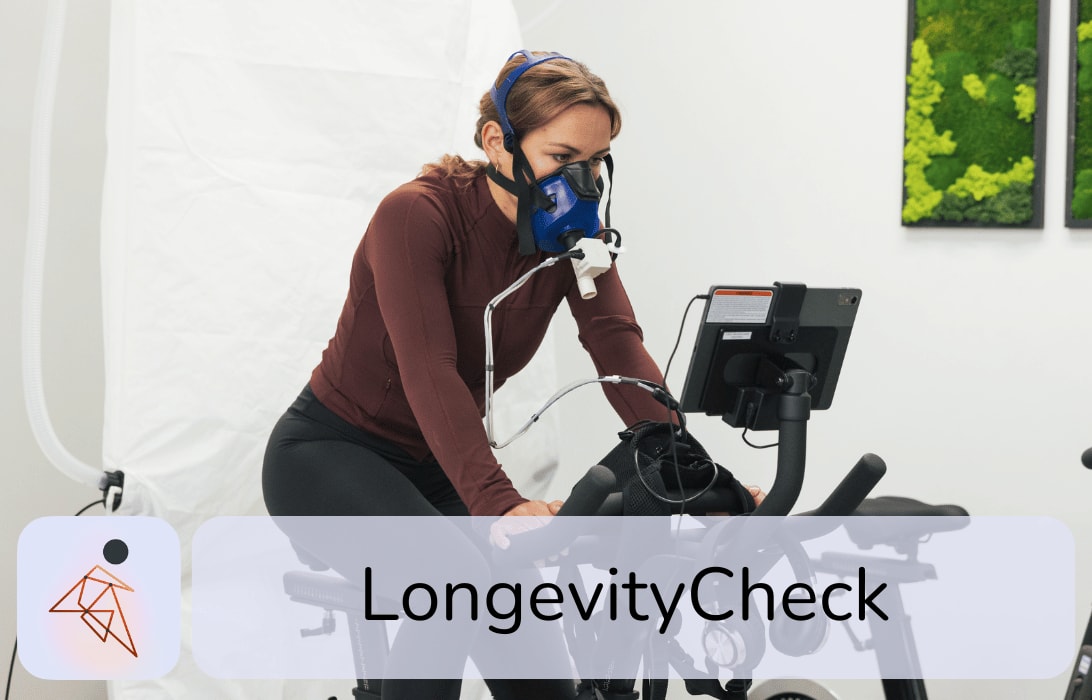
At The Smart Fit Method, we like to use Biological Age rather than simply the date on your personal calendar when describing your fitness and capabilities. We measure this using our revolutionary LongevityCheck technology, which you can read about in our article or experience the Smart Fit Method difference by joining the program.
Biological Age is a much more useful data point for a range of reasons, namely that it can predict potential health issues before they arise and help our trainers determine how to train you to prevent them.
Three categories define the life cycle of a human: visual appearance, physical ability, and cognitive ability. These three factors contribute to the functional “age” of a person beyond the chronological time spent on Earth. Let’s explore these categories and discuss how they can be optimized to delay old age.
Visual signs of aging
Generally speaking, it’s easy to tell how old a person is by looking at them. Do they have wrinkles? Is their hair gray? Even how they style their hair and clothing can give us a visual cue, but we want to be clear when we say this is the least important category when discussing “old age”.
Your visual age has little to nothing to do with your performance. In spite of that, the global anti-aging market is valued at $40 billion. Youth serums, Botox injections, and other cosmetic products and procedures designed to make the body appear younger may make you feel better emotionally, but they will do nothing to prevent the actual aging of your body.
If you enjoy using these products, please continue to do so! After all, spending money to improve self-esteem can have great benefits. We want to take a moment to make this clear distinction: reducing skin wrinkles will not affect your advancement into old age.
Physical signs of aging
Bill is 40 years old. He played football in high school and college and has a bad back and tricky knees. He doesn’t work out much nowadays since he’s too busy with work and family life. He walks his dog every day and lifts dumbbells in the garage when he remembers. Bill weighs 170 pounds now and 120 of that is muscle tissue, which is still pretty good for his age.
If Bill doesn’t begin a more robust training and nutrition program to delay the onset of old age, he will have 114 pounds of muscle at 50, 108 pounds at 60, and will be down under 100 pounds of muscle in his 70s. This will translate into Bill being unable to do stairs, carry groceries, or pick up his grandchildren with ease.
The physical signs of aging, muscular and cardiovascular atrophy, are critical to delay old age as long as possible. The rate of muscular atrophy in inactive adults, called sarcopenia, is 3-5% every decade past age 30. Even active adults can still experience muscle loss with age without the right training program.
Muscular atrophy and sarcopenia are the enemies of quality living and one of the main antagonists of old age, which is why our program at The Smart Fit Method is optimized to prevent sarcopenia in as little time as possible. We know our clients lead busy lives, and they deserve a program that improves their health and fitness without taking time out of other important matters. In just one hour a week, you can perform a total body workout protocol that will optimize your health and fitness, guided by a certified personal trainer.
Want to try to program for yourself? Book a free consult with a trainer at a studio near you to determine what you need to do to delay old age as long as possible - or improve your symptoms if you find you’re already there!
Cognitive signs of aging
One of the major antagonists of old age is cognitive decline, and it’s an incredibly common one. Why else would losing your keys or forgetting someone’s name be labeled a “senior moment”?
We’re the experts on physical anti-aging, not cognitive, but there’s a critical piece of our training protocols that’s proven to improve the cognitive decline associated with aging, and that’s Smart Ride O₂ technology.
Smart Ride O₂ is a training method that utilizes a 90% oxygen concentration along with sets of 14% oxygen deprivation. These two states are strategically employed to perform a variety of functions, including increased oxygen flow to the brain, resulting in benefits like improved cognitive function.
Smart Ride O₂ is the only training protocol with scientific backing to prove it can improve your brain function. We encourage our members to utilize the oxygen as often as possible when training in our longevity studios.
Try The Smart Fit Method - the proven anti-aging program
Our program begins with a free consultation with a certified personal trainer, so there’s no reason not to come check it out. Your trainer will show you how the program works and get you started at a price point that works for your budget.