New: Sport Performance Programs - Built for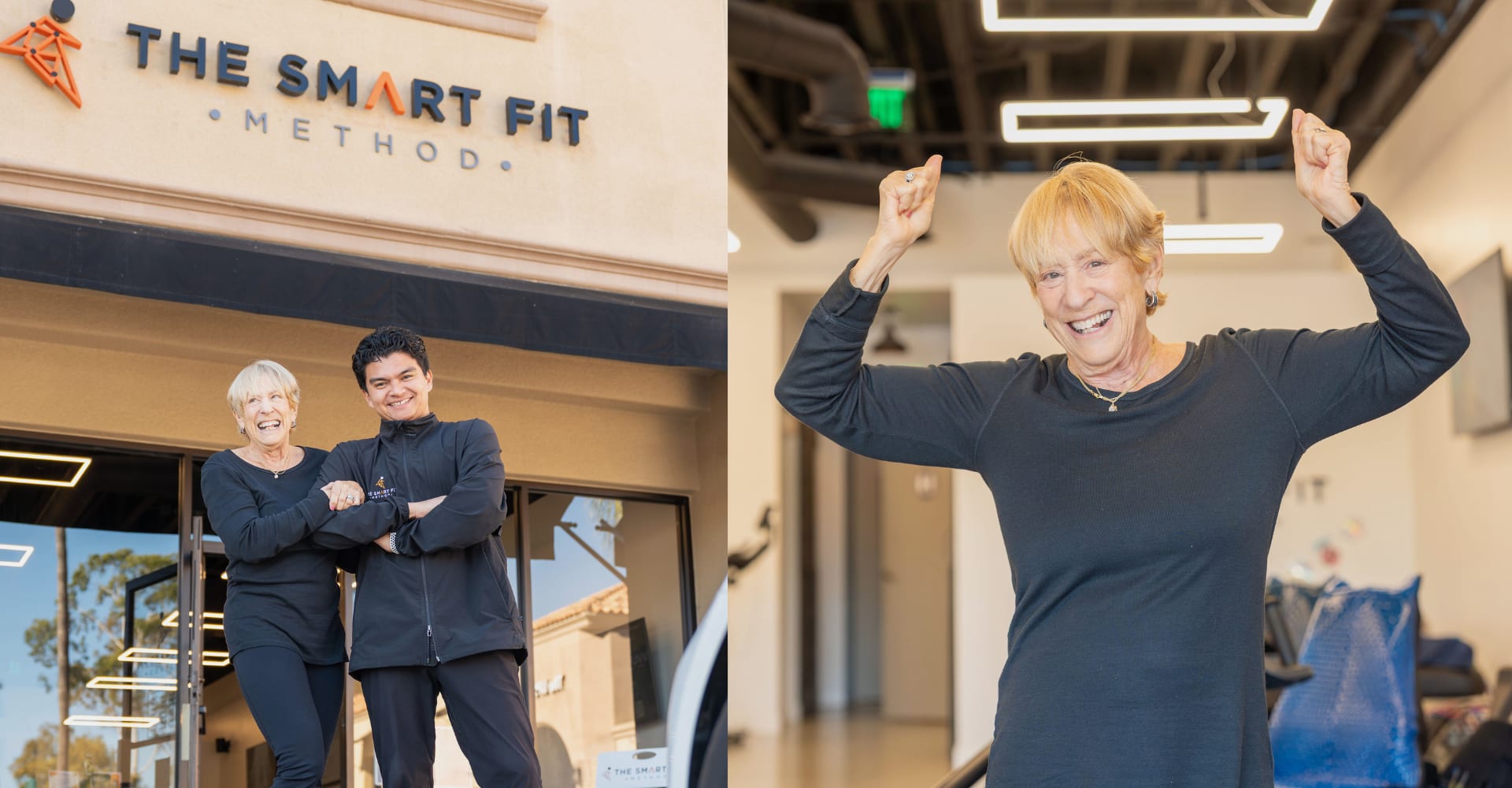
You have two ages.
One is on your driver's license. You can't do anything about it. It continues to tick forward whether you run a 10k or eat cake for breakfast. This is your chronological age.
The other one is based on your bloodwork, grip strength, your muscle, your heart, your VO₂ max. It's how old your body actually is. This second number is your biological age.
It's the one that decides how the next few decades will look and feel. Whether you spend your 60s skiing all morning and hosting dinner that night, or bracing yourself at the top of the stairs.
Two people can share the same birthday and be decades apart underneath.
Here’s the good news: your biological age isn't static, and you have a real say in where it goes. Think of it as your physical retirement fund. The more you invest today, the richer your later years. (And no, it's never too late to start.)
How Do You Test Your Biological Age?
For years, this kind of testing was locked inside research labs and clinical studies. Now you can get the whole picture: VO₂ max, body composition, metabolic efficiency, and grip strength in a single assessment.
Together, these numbers tell you exactly where you stand today, and can help map the path to where you want to go.
The key markers to look for in any assessment, and what each one reveals:
Cardiorespiratory fitness (VO₂ max)
Your VO₂ max is the maximum volume of oxygen your body can take in and use at peak effort. Think of it as the ceiling on your aerobic engine: how well your heart, lungs, and mitochondria move oxygen and turn it into usable energy.
It's also one of the strongest predictors of how long you'll live. In a study of 122,000 people, the least-fit group had roughly 5x the death risk of the elite-fit group, and the benefit had no ceiling: fitter was always better (Mandsager et al., JAMA Network Open, 2018). Even small gains matter, with every modest bump in fitness cutting mortality risk by 13 to 15% (Kokkinos et al., JACC, 2022).
Body composition
This is your ratio of lean mass to fat, and critically, where that fat sits. Subcutaneous fat (under the skin) is relatively inert and mostly just sits there. Visceral fat (packed around your organs) is metabolically active. It pumps inflammatory signals straight to your liver and drives insulin resistance and cardiovascular risk. The difference is stark: visceral fat predicts insulin resistance about 4x more strongly than subcutaneous fat, explaining 24% of the variance versus 6% (Usui et al., 2010). Two people at the same weight can have completely different metabolic futures. By using a 3D body scan, you get a much more accurate picture than what a scale can measure.
Metabolic efficiency
How well your body produces energy, and how easily it switches between burning carbs and fat for fuel. That ability, called metabolic flexibility, fades as your mitochondria age, and its decline sits upstream of insulin resistance, type 2 diabetes, and the energy slump most people write off as "just getting older." The key word is upstream: this comes before those conditions, not after them. And the failure is measurable. After a fatty meal, people who've lost that flexibility can't switch into fat-burning mode the way healthy people can (Goodpaster & Sparks, Cell Metabolism, 2017; Smith et al., Endocrine Reviews, 2018).
Grip strength
How hard you can squeeze is one of the most reliable proxies for total-body strength, and a remarkably strong predictor of longevity. It reflects your neuromuscular health (how well your muscles and nervous system work together) and acts as an early warning for the strength and muscle loss that accelerate with age.
The data is striking: every 11 pounds (5 kg) of lost grip strength is tied to a 16% higher risk of death, and grip strength predicts death and heart disease better than blood pressure does (Leong et al., The Lancet, 2015). The pattern holds across more than 3 million people in 48 studies (López-Bueno et al., Ageing Research Reviews, 2022).
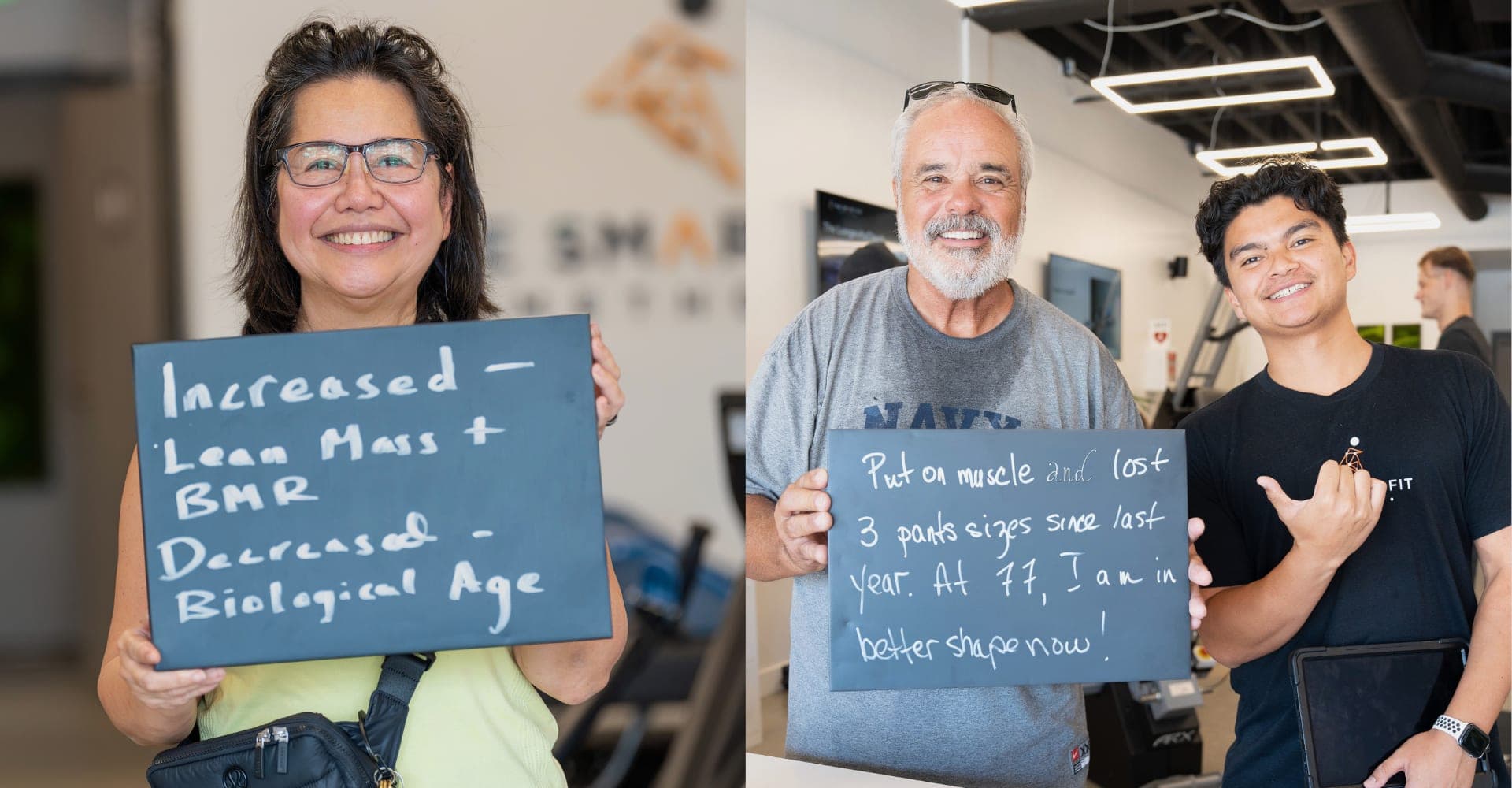
The Two Systems That Lower Your Biological Age
Lifespan quality isn't a single number. There are variables like mobility, balance, agility, flexibility, muscular endurance, coordination, and a complete program trains all of them.
But they don't all move your biological age equally. Two systems do most of the heavy lifting: your aerobic engine (VO₂ max) and your strength. Think of them as your physical retirement plan, strengthen them, and everything else has something solid to build on.
Your aerobic engine (VO₂ max)
Every physical thing you do, whether it’s a flight of stairs, a steep trail, lifting a grandkid onto your shoulders, all happens at some percentage of your maximum. The bigger your engine, the smaller that percentage, and the easier your actual life and the activities feels. It's also one of the most reversible markers of aging there is.
However, left alone, VO₂ max drops about 10% a decade, but if you train it with a plan, that decline doesn't just stall, it can actually be reversed. It's not unusual for a fit 55-year-old to carry the aerobic engine of someone fifteen years younger.
We've watched this play out with our own members. Across 171 of them (average age 57), new members walk in right around the population average for their age. After two or more years of training, they're outperforming 77% of people their age on VO₂ max. On average, our members have the cardiovascular fitness of someone 10 to 15 years younger.
See the full member study here →
Your strength and muscle
Sarcopenia starts earlier than most people think and accelerates after 50. If left alone, you lose 1–2% of muscle a year, and by your 80s, half of it can be gone. For women, it stacks on top of the bone density lost after menopause, which is why falls carry far higher stakes: sadly, a fracture in your 70s can mean a permanent loss of independence.
Again, the great news is that this is one of the most controllable variables you have. Strength is the counterweight. Muscle is metabolically active tissue: it pulls sugar from your blood, signals your bones to stay dense, and protects your independence through every decade of your life. The goal is no longer just more years, but having the capacity and vitality to spend those years, doing the things you love.
In our own members, the force that catches you before a fall, your eccentric leg strength, climbed 47%, while most people their age lose 1.5–3% a year
How to Train for a Lower Biological Age
Focus on intensity, not hours. Stimulus, not volume
What makes your body adapt isn't just the hours you spend, but the quality of the signal you send it. When you push a muscle to true fatigue, you've given it a reason to grow. Much of that signal lives in the eccentric phase -the lowering part of every rep, where the muscle lengthens under load. It's responsible for a large share of strength and muscle growth, yet it's the most undertrained, because most equipment can't load it properly, and forcing it with heavy fixed weights is exactly where injuries happen.
The solution: This is the gap adaptive resistance closes. Instead of a fixed weight, it matches resistance to the force you produce on every rep, through the full range of motion, eccentric phase included. You reach real muscular fatigue safely, in far less time. It's how a focused 20-minute session can out-train an hour on conventional equipment, building strength and muscle without making your joints pay the price. It's the principle our strength training at Smart Fit Method is built on.
The right dose of cardio, tailored to your goals
Zone 2 has become a more popular topic as of late. Without testing, it's essentially a conversational pace you could hold for an hour. This is the important work that builds your aerobic base: more mitochondria, better fat metabolism, and a bigger foundation.
But foundation-building is just one part of the picture. What pushes the ceiling higher is the opposite: short, near-maximal intervals.
In published trials, the REHIT protocol, two 20-second all-out sprints inside a roughly 10-minute session, improves VO₂ max in a fraction of the time most cardio demands.
The catch is that "all-out" has to actually mean all-out, which is almost impossible to gauge on your own. This is why we run our conditioning program on the CAROL bike, which uses AI to calibrate resistance to your real max, so those few seconds hit the exact intensity that moves the needle, all without the risk of injuries.
Personalized Training Backed by Real-Time Data
Traditional personal training often lacks precision. Even a great trainer can only estimate how you're responding. There's a real ceiling on what the human eye can track rep to rep. And people respond to the same training very differently. Without real data, even a well-built program can become a guessing game.
That's where The Smart Fit Method closes the gap. We start with an assessment that captures the full picture. VO₂ max, body composition, strength, metabolic efficiency. From there, we create a personalized plan for you based on your body, injuries or limitations, and your goals. Each session, our equipment tracks your output in real time, every rep, so your progress doesn't plateau, but continues to compound over time.
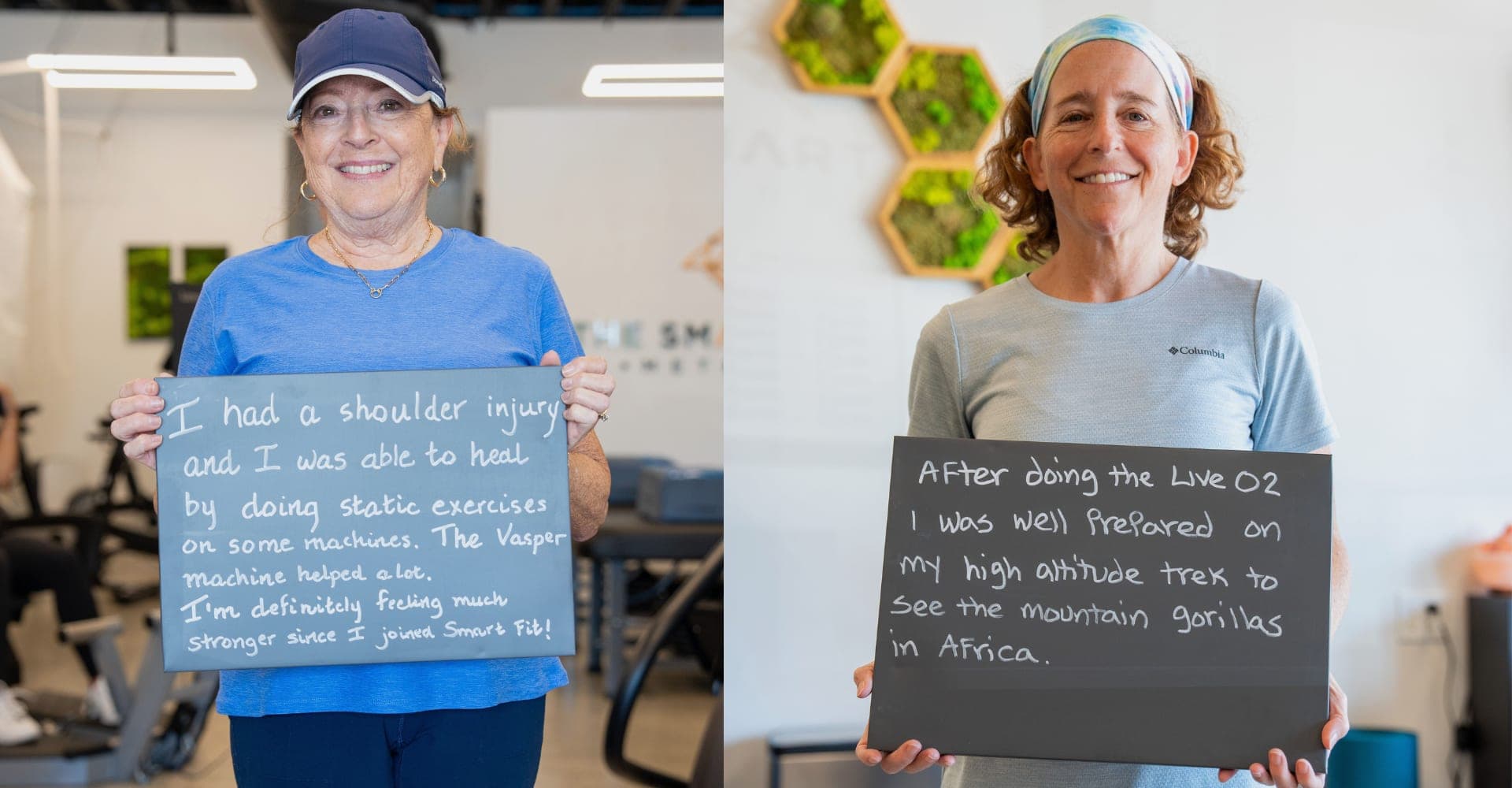
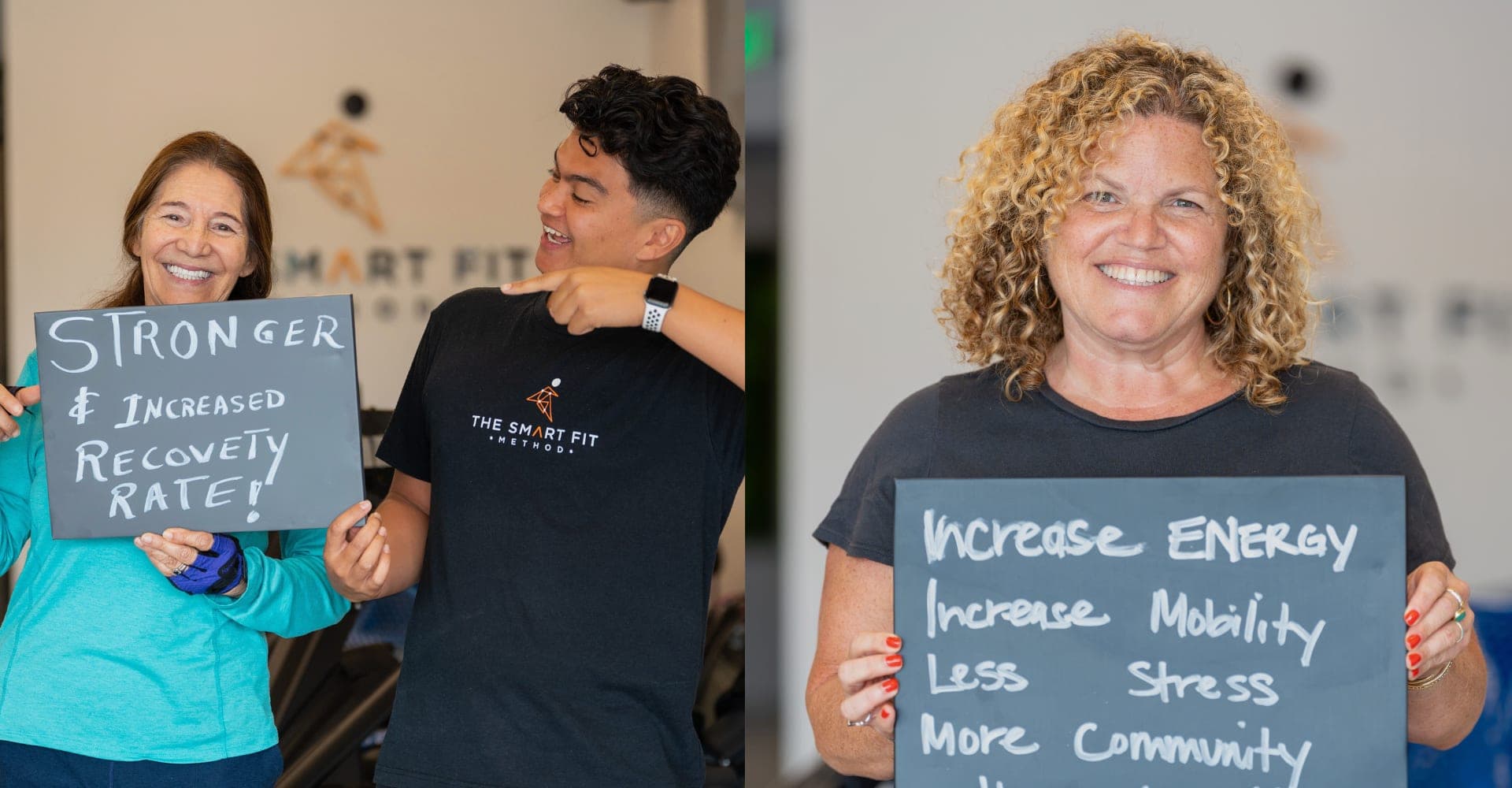
We've watched members train for all kinds of things. One prepared for a high-altitude trek in Japan with our CAROL LiveO2 program. Others are coming back from old injuries, set on getting stronger without getting hurt again. Many want to increase their energy, or keep up with their grandkids, while some want to improve their golf game, or play a full round without worrying about their back.
This is the part we're most proud of. Our members span every age, and each shows up for their own reason, but they're all training toward the same thing: the strength, capacity, and quality of life to keep doing what they love, for as long as they can.
Your chronological age is fixed. Your biological age doesn't have to be.
Book a complimentary session →
Frequently Asked Questions About Biological Age
What's the difference between biological age and chronological age?
Chronological age is how many years you've been alive. Biological age is how old your body actually is, measured by fitness, muscle, and metabolic health. They don't always match, and the goal is keeping the biological one lower.
What is a good biological age?
A "good" biological age is one that's lower than your chronological age, meaning your body is testing younger than your birthday says it should. The bigger the gap in that direction, and the more it holds or widens over time, the better.
Can you reverse your biological age?
Yes, within limits, and with consistency. Improvements in fitness, strength, and body composition can pull your biological age below your chronological one.
How long does it take to lower your biological age?
Meaningful changes in fitness and strength can show up in months, but the compounding benefits continue building the longer you train consistently. Your quality of lifespan is not a “6-month get-fit plan”, but it also doesn’t have to be complicated or confusing.